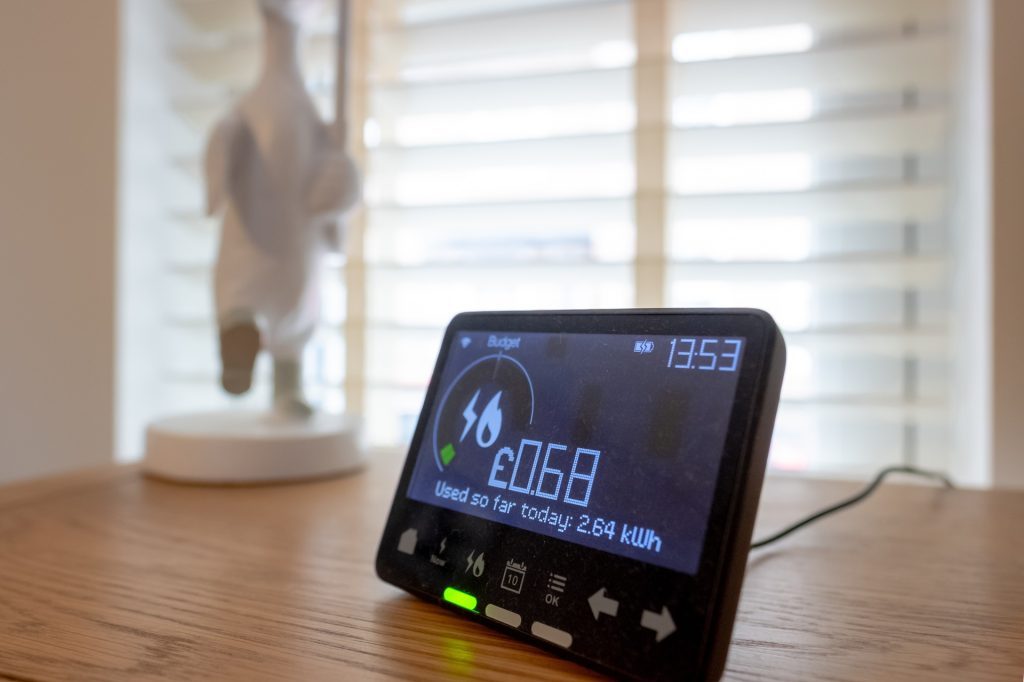
Market Wide Half Hourly Settlement is a major industry transformation programme to deliver a greener electricity grid that better reflects the way in which we generate and consume electricity.
Market Wide Half Hourly Settlement (MHHS)
More information
How does MHHS affect how I will be billed?
MHHS delivers the capability for all suppliers to offer new and innovative tariffs to their customers that reflect the time of day you are using energy based on your actual consumption per half-hour. ENGIE will communicate details of these tariffs to you as they become available.
How does MHHS affect how my energy will be settled?
Settlement processes calculate how much energy has been consumed and generated, with charges levied on suppliers when energy used and purchased doesn’t balance. Under the current system, electricity consumption is accounted for and settled based on half-hourly (HH) and non-half hourly (NHH) consumption data which is collected by NHH and HH Data Collectors.
MHHS will introduce half hourly consumption data for all electricity sites, increasing the accuracy of the settlement calculations and the overall efficiency of the market. MHHS will reduce the time taken to settle energy usage from 14 months to 4 months. The reduction in the settlement timeline is planned for July 2027.
Replace question 6 (same header)
What do I have to do to be ready for MHHS?
ENGIE electricity consumers do not have to do anything to move to MHHS, this transition will be handled by ENGIE. A small number of customers may need to agree a site supply capacity with their Distribution Network Operator after the transition. If you are one of these customers, we will be in contact to explain what you need to do.
What is MHHS – Market Wide Half Hourly Settlement?
Market Wide Half Hourly Settlement (MHHS) is a major industry initiative to transform the way the electricity market operates. Under MHHS, all electricity customers will have their electricity consumption settled every half hour.
Market-wide Half-Hourly Settlement (MHHS) is a key enabler of the flexibility to support the transition to Net Zero. It will encourage more flexible use of energy and help consumers lower their bills.
MHHS will see a significant move forward in how electricity is used and accounted for and will introduce a faster, more accurate settlement process, introducing site specific reconciliation using half-hourly consumption data for all.
When will MHHS begin?
The Market-wide Half-Hourly Settlement (MHHS) programme is progressing through a phased rollout between 2025 and 2027. Suppliers and meter agents are onboarded in qualification waves; they qualify once they have demonstrated, through formal testing and assurance, that they are able to operate within the new framework.
Key Dates:
The Market-wide Half-Hourly Settlement (MHHS) programme is progressing through a phased rollout, with industry testing currently underway. This testing ensures that suppliers and meter agents have the systems and processes in place to operate within the new MHHS framework.
Here are some of the key milestones for the MHHS programme.
| Date | Milestone | Details |
|---|---|---|
| September 2025 | M8 / M10 | MHHS changes officially went live on 22 September 2025, including: • Industry code changes • Central services and systems going live • Updates to the format of the Supply Number • Support for migration to and operations under new MHHS arrangements for MHHS qualified suppliers • Support for and reverse migration to pre-MHHS arrangements for suppliers that are not MHHS qualified |
| October 2025 | M11 | The migration window opened for suppliers and agents who have qualified. Migrations will be phased across 2025, 2026, and 2027 depending on when each supplier qualifies. |
| May 2027 | M15 | All MPANs, suppliers and their agents must be fully transitioned to operate under MHHS arrangements. |
| July 2027 | M16 | The new, faster settlement timetable goes live. The MHHS operating model is fully in effect across the entire market. |
Why does MHHS matter?
MHHS is being introduced because the current model for settling electricity consumption is not suited to the way in which we generate and use electricity today, nor how we expect to generate and use power in the future.
The UK has a target to move to a zero-carbon electricity grid by 2035. In the Energy White Paper ‘Powering our Net Zero Future’ the government has set out an ambitious programme to build a fairer greener energy system.
All this means that a larger proportion of our electricity is being generated by intermittent renewable sources of generation, such as wind or solar. At the same time, the demand on our electricity grid is increasing due to, amongst other things, greater adoption of electric vehicles and greater use of electricity for heating.
MHHS will modernise this system, allowing suppliers and the grid to settle electricity consumption based on actual consumption data. It will contribute to a more cost-effective electricity system, encouraging more flexible use of energy and helping consumers lower their bills.